Find the care-delivery impact
Map ePHI, identities, clinical workflows, devices, infrastructure, and third parties to understand what a finding can actually affect.
Explore assessments →Healthcare cybersecurity · clinical resilience
Cyber risk becomes a care-delivery problem when identities, connected devices, clinical systems, or critical vendors fail. We turn exposure into safe priorities and verified safeguards.
Security decisions for the systems care depends on.
Clinical context. Technical depth.
Connect regulatory expectations and technical findings to patient safety, operational ownership, and changes that can be implemented without disrupting care.
Map ePHI, identities, clinical workflows, devices, infrastructure, and third parties to understand what a finding can actually affect.
Explore assessments →Separate tool noise from exposure, coordinate with clinical engineering and vendors, and plan remediation around operational constraints.
Explore vulnerability management →Test the result, preserve evidence, document residual risk, and confirm that essential workflows continue to operate.
Explore readiness services →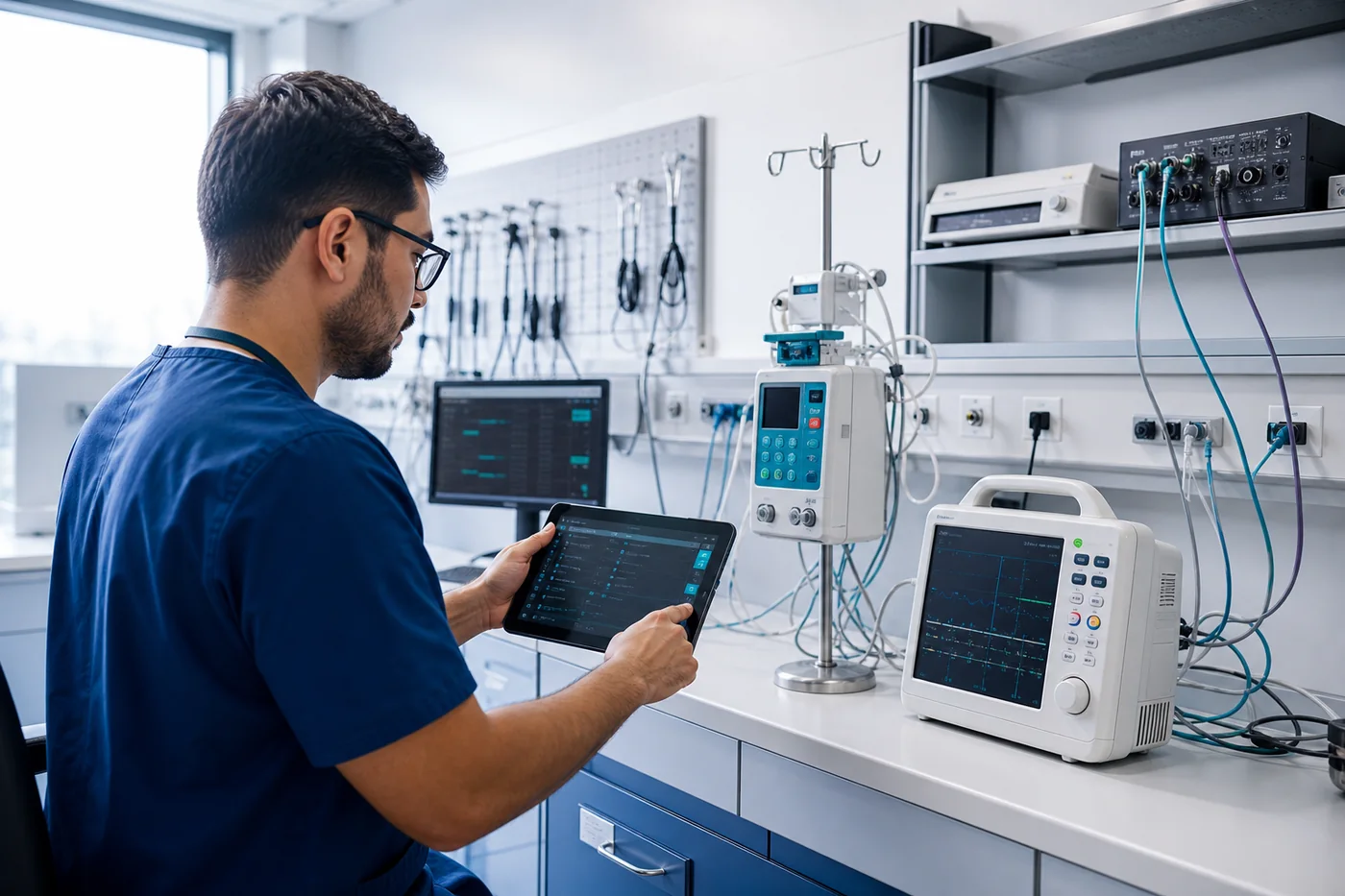
Connected medical-device security
An accurate inventory is useful only when it explains how technology supports care. We help teams understand device communications, access paths, vendor dependencies, unsupported components, and the operational consequences of remediation.
Healthcare cyber intelligence
A critical authentication bypass vulnerability in BeyondTrust Remote Support could allow unauthorized remote file operations on the appliance, impacting healthcare IT and clinical engineering workflows.
Read the analysis →
A path traversal vulnerability (CVE-2025-61624) affecting several Fortinet products could allow authenticated administrators to modify or delete arbitrary files, impacting the integrity of healthcare network…
Read the analysis →
A vulnerability in Palo Alto Networks PAN-OS could allow authenticated attackers to execute arbitrary code with root privileges, posing a risk to the perimeter security…
Read the analysis →Prepare before disruption
Ransomware and technology outages demand decisions that work under pressure. Prepare ownership, downtime procedures, communications, recovery priorities, and validation evidence before an incident tests them.
Connect systems and vendors to essential clinical and business services.
Exercise the decisions, communications, and manual workflows teams will need.
Validate restored services and safeguards before returning to normal operations.
Discuss your risks, priorities, and next steps for stronger safeguards.